<?xml version="1.0" encoding="UTF-8"?>
<feed xmlns="http://www.w3.org/2005/Atom" xmlns:dc="http://purl.org/dc/elements/1.1/" xmlns:media="http://search.yahoo.com/mrss/">
  <id>https://www.fairphone.com/stories</id>
  <title>Fairphone Stories</title>
  <subtitle>Latest updates. Expert opinions. In-depth analyses. It’s all right here on Fairphone’s official blog.</subtitle>
  <link href="https://www.fairphone.com/stories" rel="self" type="application/atom+xml"></link>
  <updated>2026-07-10T00:00:00+02:00</updated>
  <entry>
    <title>Making working conditions fairer for everyone</title>
    <link href="https://www.fairphone.com/stories/making-working-conditions-fairer-for-everyone" rel="alternate" type="text/html"></link>
    <content type="html"><![CDATA[
<h1 class="f_h_xxl">
  Making working conditions fairer for everyone
</h1>
<div class="f_article_body_wrapper">
  <section class="s_f_stories_components_paragraph o_colored_level" data-snippet="s_fp_stories_components_paragraph" data-name="Stories paragraph" style="background-image: none;">
    <p>
      <br/>
    </p>
    <p>
      <strong>
        Fairphone products are assembled under fairer working conditions in fairer factories and mines.
      </strong>
    </p>
    <p>
      We talk about this a lot. And it’s something we’re very proud of. But what exactly do we mean by
      <em>
        fairer working conditions?
      </em>
    </p>
    <p>
      The electronics industry relies on millions of factory workers and miners who frequently face exploitative, unsafe conditions that are hazardous to both their mental and physical health. And for all their effort, they get paid poverty wages. One of our core missions at Fairphone has always been to challenge this inequitable system and change the status quo.
    </p>
    <p>
      Through our &#34;Fair to People&#34; strategy, we ensure that the people behind our products benefit equitably, prioritizing safe working environments, better wages, and more worker representation. In 2025 alone, 11,084 people experienced fairer working conditions across Fairphone&#39;s supply chain. Here is a closer look at how we are making a tangible difference.
    </p>
    <h2>
      <br/>
    </h2>
    <h2>
      Closing the Living Wage Gap
    </h2>
    <p>
      A living wage is a basic human right, yet the broader tech industry repeatedly fails to guarantee one. At Fairphone, we believe that a fair product must pay a fair income. Through our groundbreaking
      <strong>
        Living Wage Bonus program
      </strong>
      , Fairphone pays the difference for every hour spent on its production line to guarantee a 100% living wage. In 2025, we distributed $215,000 in living wage bonuses, directly closing the pay gap for 1,650 workers across five supplier factories. This brings our grand total to over $1.25 million paid out to factory workers since the program began in 2019.
    </p>
    <p>
      <br/>
    </p>
  </section>
  <section class="s_f_stories_components_quote o_colored_level" data-snippet="s_fp_stories_components_quote" data-name="Stories quote" style="background-image: none;">
    <div class="f_lightbox_quote">
      <h4 class="f_h_md">
        “At just over $1 per device, achieving a living wage is a negligible fraction of a smartphone&#39;s retail price. There is no financial excuse for the broader industry not to follow suit.&#34;
      </h4>
      <div class="fp_quote_wrapper">
        <div class="fp_quote_line"></div>
        <p class="fp_quote_text">
          Raymond van Eck, Fairphone CEO
        </p>
      </div>
    </div>
  </section>
  <section class="s_f_stories_components_paragraph o_colored_level" data-snippet="s_fp_stories_components_paragraph" data-name="Stories paragraph" style="background-image: none;">
    <p>
      <br/>
    </p>
    <h2>
      Ensuring Zero Exposure and Safer Factories
    </h2>
    <p>
      No one should have to trade their long-term health for a paycheck. Last year alone, nearly 9000 workers experienced healthier and safer working conditions while working on Fairphone devices. We actively guide our suppliers on ways to improve hazard prevention and fire preparedness, successfully helping one particular supplier achieve the rigorous ISO45001 health and safety certification in 2025.
    </p>
    <p>
      Furthermore, as a signatory of the Towards Zero Exposure (TZE) program, we became the first company to entirely eliminate all Clean Electronics Production Network (CEPN) round two priority chemicals in our final assemblies.
    </p>
    <p>
      <br/>
    </p>
    <h2>
      Amplifying the Worker&#39;s Voice
    </h2>
    <p>
      True empowerment requires democratic representation. We actively bring worker perspectives into factory management to ensure employees can safely speak up about their conditions. Fairphone has been providing comprehensive training on effective grievance channels for management and worker representatives at its final smartphone assembly supplier for some time now. By listening directly to worker feedback, we help guide targeted factory investments, such as renovating worker dormitories and building a new nursery room to foster a more inclusive workplace.
    </p>
    <p>
      <br/>
    </p>
    <h2>
      Beyond the Factory: Miners and E-Waste Collectors
    </h2>
    <p>
      Our commitment to fairness extends to the very beginning and end of a product&#39;s lifecycle. Upstream, we support artisanal and small-scale miners in regions like the Democratic Republic of Congo by purchasing cobalt and copper credits. These credits help mining cooperatives improve local economic and safety conditions, such as building safe changing rooms for women workers. When it comes to e-waste, we are actively exploring partnerships to empower informal e-waste pickers, exploring pre-financing models and providing personal protective equipment to create dignified and safer jobs.
    </p>
    <p>
      <br/>
    </p>
    <h2>
      We’re now a Leading Employer in the Netherlands
    </h2>
    <p>
      In June 2026, Fairphone was recognized as a
      <strong>
        Leading Employer in the Netherlands for 2026
      </strong>
      by the Institute of Research &amp; Data Aggregation. This award is given to the country’s top 1% as per the organization’s independent meta-study, placing us in a prestigious club alongside KPN, Ikea, and Deutsche Telekom, among others. For us, this is a unique milestone, proving our workplace culture, now 200 employees strong across 35+ nationalities, is just as impactful as our sustainable hardware.
    </p>
    <p>
      <br/>
    </p>
    <p>
      All of our initiatives just go to show that commercial success and ethical operations are not mutually exclusive. By putting the well-being of workers first, we are demonstrating that a fairer electronics industry is entirely within reach. Here&#39;s to making the tech industry fairer for everyone involved across the board.
    </p>
  </section>
</div>
]]></content>
    <author>
      <name>Fairphone</name>
    </author>
    <updated>2026-07-10T00:00:00+02:00</updated>
    <id>https://www.fairphone.com/stories/making-working-conditions-fairer-for-everyone</id>
  </entry>
  <entry>
    <title>Corporate distancing will not save children from the mines.</title>
    <link href="https://www.fairphone.com/stories/corporate-distancing-will-not-save-children-from-the-mines" rel="alternate" type="text/html"></link>
    <content type="html"><![CDATA[
<h1 class="f_h_xxl">
  Corporate distancing will not save children from the mines.
</h1>
<div class="f_article_body_wrapper">
  <section class="s_f_stories_components_paragraph o_colored_level" data-snippet="s_fp_stories_components_paragraph" data-name="Stories paragraph" style="background-image: none;">
    <p>
      <br/>
    </p>
    <p>
      Child labor is not an exception but a feature of a consumer electronics industry obsessed with reducing costs to an absolute minimum. For decades, major tech brands have demanded cheaper components and higher margins every single year. They celebrate record profits while the true price of their devices is paid by the most vulnerable people on Earth. It is unfortunately the brutal reality.
    </p>
    <p>
      Today is the World Day Against Child Labor. Across the entire tech sector, companies will send out tough statements and social media posts condemning the practice. Yet the recent 2025 report from the International Labor Organization and UNICEF reveals a terrifying truth: the world has officially missed its goal to eliminate child labor by 2025. There are still nearly 138 million children working worldwide, most of them in sub-Saharan Africa. If we want to know why we failed, we only need to look at our own supply chains.
    </p>
    <p>
      I recently returned from the Democratic Republic of Congo, where I saw the reality of artisanal cobalt mining with my own eyes. The DRC holds the vast majority of global cobalt reserves, and estimates suggest that tens of thousands of children work in the mines. The contrast between the beautiful smartphones we own and the red dust of the mines in Kolwezi is incredibly shocking. The work is hard, exhausting, and life-threatening. You see people, men and women, breaking the ground with basic tools to extract the minerals from the soil that power our digital world. But my biggest realization was not just the extreme hardship I saw. It was the realization that for countless families in the region, mining is their only economic means of survival.
    </p>
    <p>
      When most major tech companies are confronted with the reality of child labor in places like Congo, their standard reaction is to hide behind paperwork. Child labor in their supply chain is even often denied. They point to corporate ethical codes of conduct and complex audit schemes. But anyone who has visited these regions knows that this is an illusion. Artisanal and industrial materials are often mixed at local trading houses before reaching a global smelter.
    </p>
    <p>
      This strategy of corporate distancing will not save a single child. By officially banning the artisanal mining of cobalt on paper while turning a blind eye to how the supply chain actually functions, the industry simply drives these miners further into the shadows. It strips the miners of any sort of leverage, leaving them unprotected and at the mercy of an unregulated market.
    </p>
    <p>
      <br/>
    </p>
  </section>
  <section class="s_f_stories_components_quote o_colored_level" data-snippet="s_fp_stories_components_quote" data-name="Stories quote" style="background-image: none;">
    <div class="f_lightbox_quote">
      <h4 class="f_h_md o_default_snippet_text">
        &#34;You cannot fix a rotten system by creating a paper reality that is only meant to protect your brand image.&#34;
      </h4>
    </div>
  </section>
  <section class="s_f_stories_components_paragraph o_colored_level" data-snippet="s_fp_stories_components_paragraph" data-name="Stories paragraph" style="background-image: none;">
    <p>
      At Fairphone, we choose transparency. We believe that if you make a profit from a material or mineral, you have a fundamental responsibility toward the people who pull it out of the ground. You cannot fix what you refuse to look at. Instead of banning artisanal materials, we work directly with these mining communities. Through our involvement with the Fair Cobalt Alliance, we invest in formalizing small-scale mines. We help create safer working conditions, ensure access to protective equipment, and, most importantly, work to ensure that adult miners receive a fair and stable living wage.
    </p>
    <p>
      The solution to child labor is no mystery. It is not solved by corporate decrees from thousands of miles away. It is solved by basic economics. When adults earn enough to feed and support their families, their children do not have to work in the mines to make a living. They can go to school instead.
    </p>
    <p>
      Our entire mission at Fairphone is to prove that this model is viable. We ruthlessly map our supply chains because full transparency is the only way to enforce real accountability. We demonstrate that it is possible to make fantastic consumer electronics without treating the people at the source as disposable commodities. Let us be honest: Fairphone is not perfect. The truth is that 100% honesty in a deeply rotten global economy is an ongoing journey. It is not a static destination, but we are fully committed to pushing the boundaries of what is possible.
    </p>
    <p class="f_stories_text o_default_snippet_text">
      We cannot wish child labor away. We cannot solve it with publicity campaigns. If the tech industry truly wants to eradicate this practice, it must fundamentally change how it values human labor. The tech industry must accept that ethical sourcing costs money and requires you to commit to solving the problem instead of ignoring it. Abandoning the most vulnerable communities is the easy way out. It is time for the tech industry to take responsibility and do the real work.
      <br/>
    </p>
  </section>
</div>
]]></content>
    <author>
      <name>Raymond van Eck</name>
    </author>
    <updated>2026-06-12T00:00:00+02:00</updated>
    <id>https://www.fairphone.com/stories/corporate-distancing-will-not-save-children-from-the-mines</id>
  </entry>
  <entry>
    <title>Is buying refurbished better than new?</title>
    <link href="https://www.fairphone.com/stories/is-buying-refurbished-better-than-new" rel="alternate" type="text/html"></link>
    <content type="html"><![CDATA[
<h1 class="f_h_xxl">
  Is buying refurbished better than new?
</h1>
<div class="f_article_body_wrapper">
  <section class="s_f_stories_components_paragraph o_colored_level" data-snippet="s_fp_stories_components_paragraph" data-name="Stories paragraph" style="background-image: none;">
    <p>
      <br/>
    </p>
    <p>
      Let’s get right down to it.
    </p>
    <p>
      The simplest argument for choosing a refurbished device over a brand new one will be the more affordable price tag. However, there is so much more savings involved, so many more costs that you help avoid. If you are currently deciding between a brand-new Fairphone (Gen. 6) or a refurbished model, we want to give you total transparency. Because at Fairphone, a refurbished phone isn&#39;t a compromise. It’s a badge of honor for a circular economy.
    </p>
    <p>
      <br/>
    </p>
    <h5>
      Refurbished doesn’t automatically mean a smaller footprint
    </h5>
    <p>
      Let’s bust a common myth right away: buying a refurbished phone doesn&#39;t magically erase the carbon emitted or the rare earth metals mined to build it. That ecological debt is already embedded into the physical hardware, thanks to the manufacturing process behind it. In fact, if a refurbished phone comes from a standard 14-day return window, it has technically been shipped around more than normal, meaning its transportation footprint is slightly higher than a new phone sent straight from the factory.
    </p>
    <p>
      <br/>
    </p>
    <h5>
      So what makes refurbished more sustainable?
    </h5>
    <p>
      Manufacturing accounts for the overwhelming majority of a smartphone&#39;s lifetime emissions. If a phone sits unused in a warehouse, gets thrown away, or is prematurely recycled, all that initial environmental damage was for nothing. By choosing a refurbished Fairphone (Gen. 6), you are ensuring that the resources already extracted are put to work over a full lifecycle while actively offsetting the demand for a brand-new phone to be manufactured.
    </p>
    <p>
      <br/>
    </p>
    <h5>
      Where do our refurbished devices come from?
    </h5>
    <p>
      While every new device requires entirely new raw material extraction, factory assembly, and linear consumption, a refurbished Fairphone (Gen. 6) is rescued from three highly efficient circular loops:
    </p>
    <p>
      <strong>
        - The 14-day &#34;cool-offs&#34;:
      </strong>
      Pristine phones returned by users who simply changed their mind. Legally, an opened box cannot be resold as &#34;new,&#34; making this a premium steal for the eco-conscious buyer.
    </p>
    <p>
      <strong>
        - The out-of-the-box DOAs (Dead on Arrival):
      </strong>
      These are units with minor initial factory glitches. Thanks to our modular design, our technicians can replace a single faulty part in minutes, saving the rest of the pristine device from the scrap heap.
    </p>
    <p>
      <strong>
        - Our Reuse and Recycle Program:
      </strong>
      This is where we source devices traded in by previous users when they switch to a new device.
    </p>
    <p>
      <br/>
    </p>
    <h5>
      Fairphone versus the wider tech industry
    </h5>
    <p>
      Across the broader electronics industry, processing individual open-box returns is costly. Historically, many major corporations found it cheaper to discard or ship returns to developing countries rather than inspect and repackage them.
    </p>
    <p>
      There is a massive legislative gap here. While strict new EU regulations, like the Ecodesign for Sustainable Products Regulation, are forcing large companies to publicly report what they destroy, an outright destruction ban currently only applies to textiles and footwear. Small electronics are not legally banned from destruction yet.
    </p>
    <p>
      Choosing a refurbished Fairphone (Gen. 6) is a direct vote against this systemic waste. Instead of exploiting legislative loopholes, we run a regional, European refurbishment loop. We treat returns as an asset, keeping valuable electronics from being recycled prematurely.
    </p>
    <p>
      <br/>
    </p>
    <h5>
      How do we refurbish our devices
    </h5>
    <p>
      We don&#39;t believe in replacing parts just for the sake of aesthetics, because replacing perfectly functional components creates unnecessary electronic waste. For example, batteries are tested and guaranteed to hold over 80% capacity. We only swap them out if they fall below that threshold. Screens are only replaced if they have more than two scratches, and outer frames are only swapped if scuffs are deep and highly visible. Just like our new devices, a refurbished model ships with no chargers or cables to prevent e-waste. It arrives in plastic-free, recyclable packaging that often utilizes existing, used boxes with a refurbished label to eliminate printing waste.
    </p>
    <p>
      <em>
        Please Note: The internal specifications of a new and refurbished Fairphone (Gen. 6) are completely identical, with one minor exception: because refurbished phones may have been opened during tech checks, the original IP (ingress protection) water-resistance rating cannot be guaranteed.
      </em>
    </p>
    <p>
      <br/>
    </p>
    <h5>
      The Fairphone difference
    </h5>
    <p>
      Refurbished tech from other brands often comes with a risky, short one-year warranty. We don&#39;t think that’s very fair. That’s why we offer the refurbished Fairphone (Gen. 6) with the exact same five-year warranty as a brand-new device. And yes, the warranty is fully transferable to a third or fourth user down the line. You also get the exact same software support longevity as a new device, with official software updates guaranteed until 2033.
    </p>
    <p>
      On top of this, you’ll enjoy the same modular advantages of a new Fairphone device. If you drop a standard refurbished phone from another brand and crack the screen, chances are repair costs are so high it ruins your initial savings. Because our refurbished model uses the exact same modular architecture, you can buy affordable, standard spare parts from our webshop and fix it yourself in the comfort of your home.
    </p>
    <p>
      <br/>
    </p>
    <h5>
      So what’s better: Refurbished or brand new?
    </h5>
    <p>
      Ultimately, it comes down to choice. A brand-new Fairphone device is still more sustainable in the long run compared to other competitor devices and comes to you in pristine condition. Meanwhile, a refurbished device nets you all the functional advantages of a brand-new device at a more affordable cost. Same warranty, same software support, same award-winning modular design with more affordable spare parts than the competition.
    </p>
    <p>
      Whether you choose new or refurbished, you are choosing a smartphone that is built to last, better for people, and better for the planet.
    </p>
    <p>
      <br/>
    </p>
    <p>
      <em>
        Our stock of refurbished phones depends on the supply of used products.
        <a href="https://www.fairphone.com/the-fairphone-gen-6" target="_blank">
          See what’s available here.
        </a>
        If devices are out of stock, don’t worry. Refurbishing is a continuous process for us. You can set a reminder to make sure you’re updated when units are available.
      </em>
    </p>
  </section>
</div>
]]></content>
    <author>
      <name>Thea Kleinmagd</name>
    </author>
    <updated>2026-06-04T00:00:00+02:00</updated>
    <id>https://www.fairphone.com/stories/is-buying-refurbished-better-than-new</id>
  </entry>
  <entry>
    <title>Everybody loves Fairphone. See what we mean.</title>
    <link href="https://www.fairphone.com/stories/everybody-loves-fairphone-see-what-we-mean" rel="alternate" type="text/html"></link>
    <content type="html"><![CDATA[
<h1 class="f_h_xxl">
  Everybody loves Fairphone. See what we mean.
</h1>
<div class="f_article_body_wrapper">
  <section class="s_f_stories_components_paragraph o_colored_level" data-snippet="s_fp_stories_components_paragraph" data-name="Stories paragraph" style="background-image: none;">
    <p>
      <br/>
    </p>
    <p>
      Fairphone has grown leaps and bounds in the last decade, nearing one million users across the world. Our smartphones have consistently smashed repairability scores, setting an example for the industry with longer support and warranty periods over the years. The Fairphone (Gen. 6) is our most sustainable smartphone yet, containing over 50% fair and recycled materials by total weight. Our audio range is now redefining the category when it comes to repairable and sustainable design. We’ve successfully lobbied for fairer practices in the tech space, setting up credit systems to improve material sourcing. We have won multiple awards and certifications, consistently raising the bar every year. This includes trophies at the Glomos, the iF Design Awards, and the Koning Willem I Sustainable Entrepreneurship Plaque in 2025, personally awarded to us by Queen Máxima of the Netherlands.
    </p>
    <p>
      As a homegrown Dutch brand designed in Europe, the accolades prove that we’re on the right track. We&#39;ve transitioned fully from start-up to scale-up, with more and more people switching to fair. What’s even more heartening is that it&#39;s not just individuals. Here are some of the partnerships, tie-ups, and collaborations that we are particularly proud of.
      <br/>
      <br/>
    </p>
    <h4>
      Local government bodies
    </h4>
    <p>
      The Netherlands is where Fairphone was born, and in the thirteen years since, we’re proud to be part of local Dutch government in a meaningful way. Today, Fairphone devices are offered as official work devices to employees at a wide array of municipalities and civic corporations across the Netherlands. This includes Amsterdam and Haarlem in the west, Apeldoorn, Nunspeet, Nijkerk, and Houten in the centre, and Eindhoven down south. With these partnerships, we are able to help the Netherlands push toward a fully circular urban economy.
    </p>
    <h4>
      Schools and colleges
    </h4>
    <p>
      In early 2026, Nijmegen’s Radboud University in the Netherlands officially designated the Fairphone as the standard company device for its employees. The main drivers behind this decision were our five-year warranty periods and long-term software support that drastically cuts hardware turnover costs and digital waste.
    </p>
    <p>
      <br/>
    </p>
  </section>
  <section class="s_f_stories_components_image o_colored_level" data-snippet="s_fp_stories_components_image" data-name="Stories image" style="background-image: none;">
    <img src="https://www.fairphone.com/web/image/3434262-9bd721b6/1778690006088?access_token=c0da935c-a855-4502-8cf1-6f4231e277e2" alt="" class="f_stories_image f_ar_16_9 f_object_fit_cover img img-fluid o_we_custom_image" data-quality="85" data-original-id="3434260" data-original-src="/web/image/3434260-21f75897/1778690006088" data-mimetype="image/webp" data-animated="false" data-resize-width="1392" loading="lazy"/>
  </section>
  <section class="s_f_stories_components_paragraph o_colored_level" data-snippet="s_fp_stories_components_paragraph" data-name="Stories paragraph" style="background-image: none;">
    <h4>
      <br/>
    </h4>
    <p>
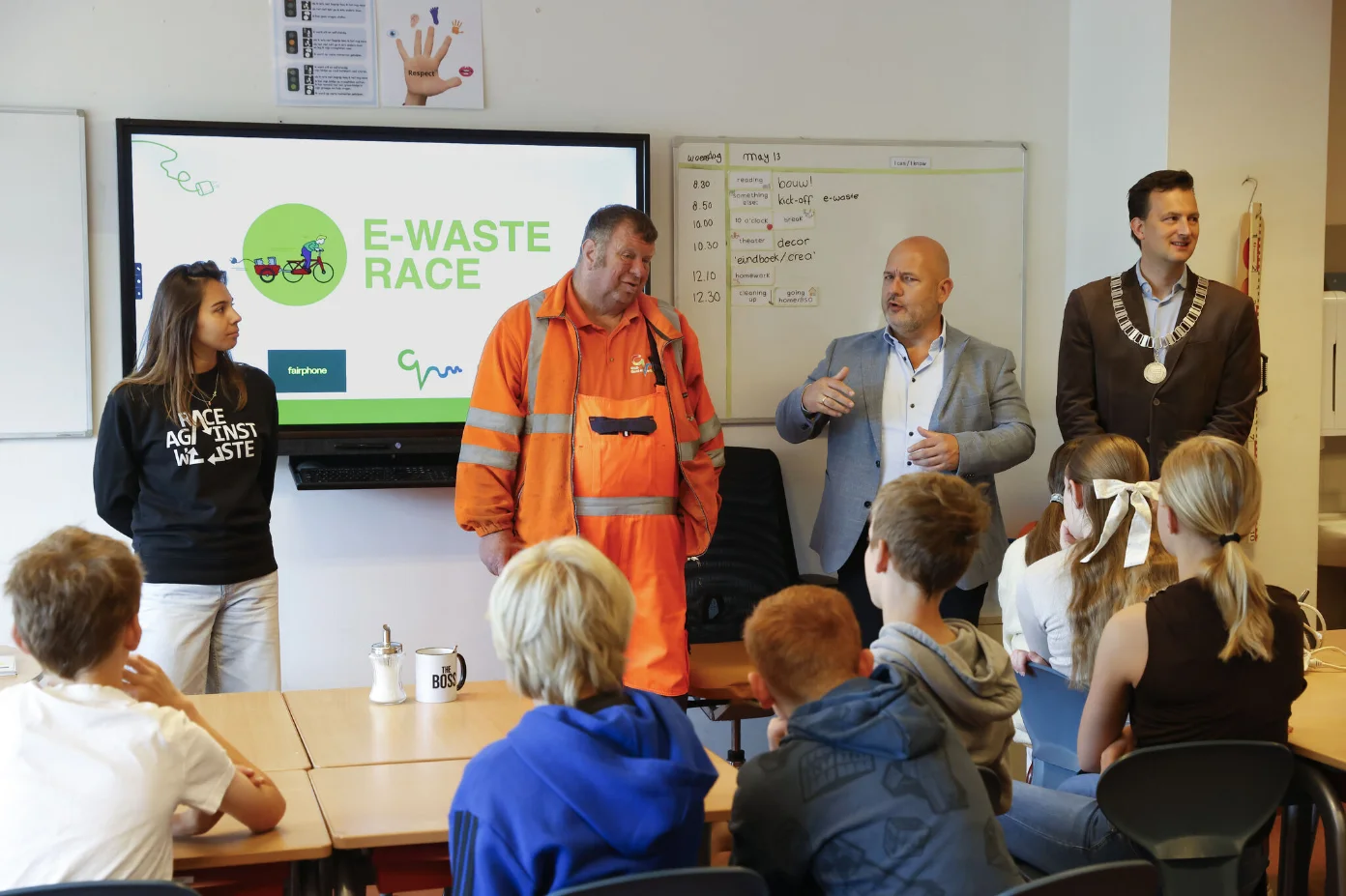
      We have also been actively partnering with the Eindhoven-based social enterprise for three years now, conducting outreach programs at Dutch schools. In general, our e-waste race partnerships have become a major engine for our waste collection efforts, accounting for 34% of the total weight of all electronic waste collected in 2025. This year, we aim to scale up our collaboration with Race Against Waste, with ten races planned across the Netherlands and the UK.
    </p>
    <h4>
      Business to Business
    </h4>
    <p>
      Online grocery innovator Picnic Technologies integrated Fairphone as its core company device for corporate operations across the Netherlands, Germany, and France. The partnership ensures that Picnic’s internal organizational logistics match the eco-conscious commitments of its electric delivery fleet. Other major organizations that offer Fairphone as a work device include Airbus and Deutsche Telekom.
    </p>
    <h4>
      Social enterprises
    </h4>
    <p>
      In mid-2023, waste-to-product leader Renewi deployed an initial fleet of over 900 Fairphone 4 devices across its Dutch and Belgian divisions.  In a true circular loop, Renewi&#39;s subsidiary, Coolrec, produces the custom &#34;CoolCover&#34; protective cases for these phones entirely out of plastic recycled from old refrigerators. Since then, they have also started providing Fairphone 5 and the Fairphone (Gen. 6) for all their new employees as a work device.
    </p>
    <p class="f_stories_text o_default_snippet_text">
      In early 2026, Fairphone signed on as the official smartphone partner for Klabu, a sports-centric social enterprise that builds clubhouses in refugee camps and urban areas around the world. Clubhouse coordinators in select regions now use Fairphone devices for carrying out organizational tasks, creating content, conducting activities, and more.
    </p>
    <p class="f_stories_text o_default_snippet_text">
      <br/>
    </p>
  </section>
  <section class="s_f_stories_components_image o_colored_level" data-snippet="s_fp_stories_components_image" data-name="Stories image" style="background-image: none;">
    <img src="https://www.fairphone.com/web/image/3434263-c5ce3722/Feyenoord-x-Fairphone-Article-Image?access_token=f2b23359-36fe-4e4a-81b4-a14565612fb7" alt="" class="f_stories_image f_ar_16_9 f_object_fit_cover img img-fluid o_we_custom_image" data-quality="85" data-original-id="3434261" data-original-src="/web/image/3434261-f363cb3d/Feyenoord-x-Fairphone-Article-Image" data-mimetype="image/webp" data-animated="false" data-resize-width="1200" loading="lazy"/>
    <h4>
      <br/>
    </h4>
    <h4>
      And the latest… Feyenoord FC
    </h4>
    <p>
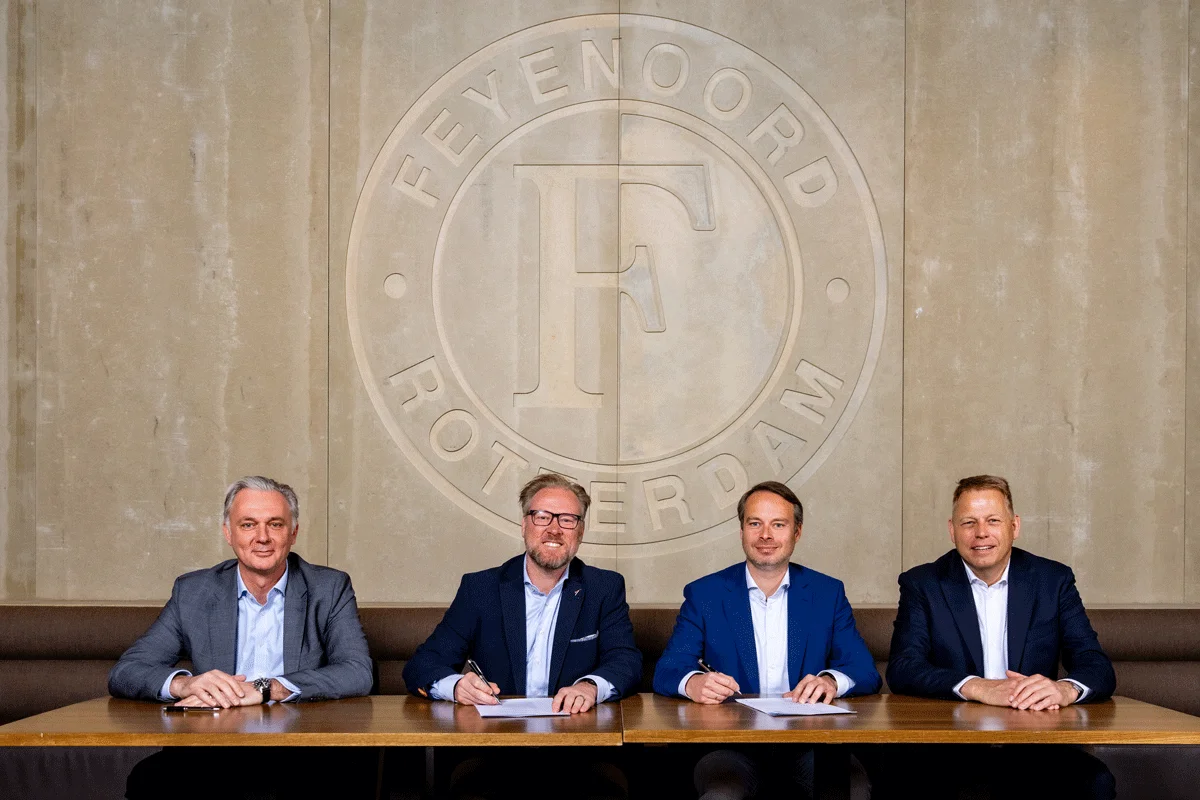
      In a landmark multi-year agreement starting in July 2026, Fairphone is now a proud affiliate sponsor of Rotterdam-based football club Feyenoord, joining forces with their main partner, MediaMarkt. The Fairphone logo will be prominently featured on the official match wear shorts for both the men&#39;s and women&#39;s first teams, alongside courtside visibility at their home stadium, De Kuip. Entering professional sports is a massive milestone for us, proving that sustainable and ethical electronics are now going mainstream, rather than a niche alternative.
    </p>
    <p>
      For us, every company we tie up with, every partner we bring on, and every organization that chooses Fairphone only helps us scale the impact we’re already making. Through our expanded reach, we’re driving real change on the ground, from reducing carbon emissions to paying better wages and improving factory working conditions. Here’s to more people switching to fair. Here’s to more people choosing Fairphone.
    </p>
    <p>
      <br/>
    </p>
  </section>
</div>
]]></content>
    <author>
      <name>Fairphone</name>
    </author>
    <updated>2026-05-21T00:00:00+02:00</updated>
    <id>https://www.fairphone.com/stories/everybody-loves-fairphone-see-what-we-mean</id>
  </entry>
  <entry>
    <title>Summing up our 2025 Impact Report</title>
    <link href="https://www.fairphone.com/stories/summing-up-our-2025-impact-report" rel="alternate" type="text/html"></link>
    <content type="html"><![CDATA[
<h1 class="f_h_xxl">
  Summing up our 2025 Impact Report
</h1>
<div class="f_article_body_wrapper">
  <section class="s_f_stories_components_paragraph o_colored_level" data-snippet="s_fp_stories_components_paragraph" data-name="Stories paragraph" style="background-image: none;">
    <p>
      <br/>
    </p>
    <p>
      Whenever people ask us what we do at Fairphone, the easiest answer is that we make sustainable technology. To which people usually respond,
    </p>
    <blockquote>
      <strong>
        “Er, but how do you make technology sustainable?”
      </strong>
    </blockquote>
  </section>
  <section class="s_f_stories_components_video_highlight o_colored_level" data-snippet="s_fp_stories_components_video_highlight" data-name="Stories video highlight" style="background-image: none;">
    <section class="f_video_wrapper o_colored_level" style="background-image: none;">
      <div class="f_youtube_player f_js_youtube_player" data-youtube-id="sZfAWKt8I8o">
        <img src="https://www.fairphone.com/web/image/3396701-a09cc023/IR-Video-Thumbnail-for-Mailer?access_token=25d7cc7e-7ac2-43ff-90b2-850b0c13b8a3" class="f_image img img-fluid o_we_custom_image" data-quality="85" data-original-id="3396699" data-original-src="/web/image/3396699-0fe8ae2a/IR-Video-Thumbnail-for-Mailer" data-mimetype="image/webp" data-animated="false" data-resize-width="1392" alt="A young man sits in the middle of the Fairphone studio explaining how Fairphone makes sustainable tech." title="Fairphone Impact Report Launch Video" loading="lazy"/>
        <i class="f_icon f_play_icon_green f_js_play_youtube_full_screen" data-fp-youtube-popup="sZfAWKt8I8o" data-fp-youtube-id="sZfAWKt8I8o"></i>
        <div class="f_youtube_modal_wrapper" id="sZfAWKt8I8o">
          <i class="fp_icon f_close_icon_2 f_js_play_youtube_full_screen" data-fp-youtube-popup="sZfAWKt8I8o" data-fp-youtube-id="sZfAWKt8I8o"></i>
          <div class="f_youtube_iframe_wrapper"></div>
        </div>
      </div>
    </section>
  </section>
  <section class="s_f_stories_components_paragraph o_colored_level" data-snippet="s_fp_stories_components_paragraph" data-name="Stories paragraph" style="background-image: none;">
    <p class="f_stories_text o_default_snippet_text">
      <br/>
    </p>
    <p class="f_stories_text o_default_snippet_text">
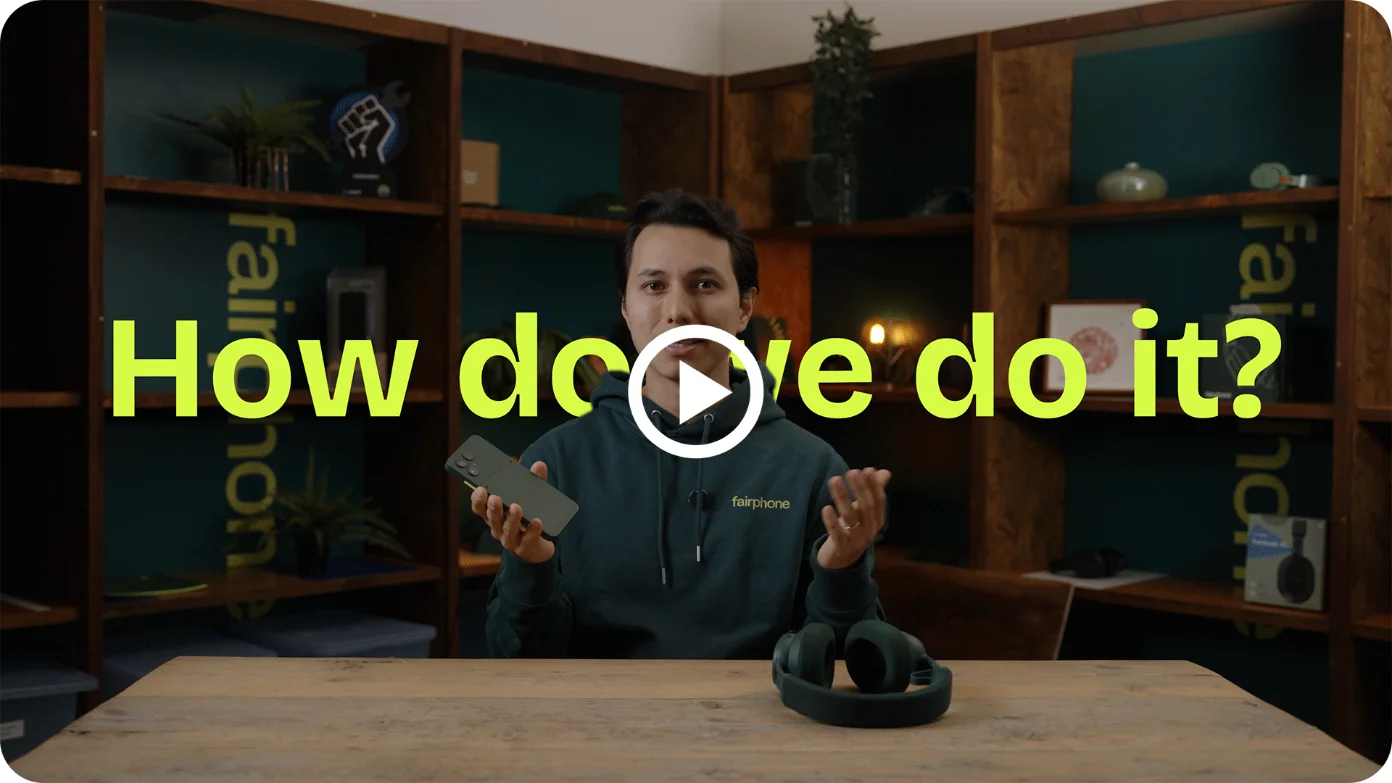
      Every year, we release our Impact Report, which deep-dives into all our efforts to make our supply chain fairer in superfine detail. However, we also understand a 60-page report (not counting the annexes) might be quite daunting. So we put together this quick cheat sheet with 15 key highlights.
    </p>
    <p class="f_stories_text o_default_snippet_text">
      <br/>
    </p>
  </section>
  <section class="s_f_stories_components_bullet_list o_colored_level" data-snippet="s_fp_stories_components_bullet_list" data-name="Stories bullet list" style="background-image: none;">
    <section class="f_header_section o_colored_level" style="background-image: none;">
      <h5 class="f_h_sm o_default_snippet_text">
        Here are the highlights from Fairphone&#39;s 2025 Impact Report
        <br/>
        <br/>
      </h5>
    </section>
    <ul class="f_list f_list_style_disk" data-name="Story list">
      <section data-name="Story list item" style="background-image: none;" class="o_colored_level">
        <li>
          <strong>
            DOUBLE THE INDUSTRY AVERAGE LIFESPAN:
          </strong>
          Fairphone devices continue to last nearly twice the industry average, with an expected lifespan almost double the market average for Fairphone 3(+) and beyond. 40% of Fairphone 3 devices are still in active use seven years after their launch!
          <br/>
          <br/>
        </li>
        <li>
          <strong>
            AVOIDED NATURAL RESOURCE USE:
          </strong>
          Thanks to our extended product lifespans, we avoided the use of a million cubic meters of freshwater and nearly 15 tons of raw material extraction in 2025. That’s enough water to meet the annual needs of the entire country of Monaco and enough rock and ore to fill an entire school bus!
          <br/>
          <br/>
        </li>
        <li>
          <strong>
            AVOIDED EMISSIONS:
          </strong>
          We also avoided over 2000 tons of CO₂e emissions in 2025. Imagine someone flying over a thousand times from Amsterdam to New York and back. Same carbon footprint!
          <br/>
          <br/>
        </li>
        <li>
          <strong>
            LOWER PRODUCT CARBON FOOTPRINT:
          </strong>
          The Fairphone (Gen. 6) has our lowest product carbon footprint yet at 29 kg CO₂e. That’s a whopping 30% drop, compared to the Fairphone 5 (42 kg CO₂e). This was made possible due to the extended battery life on the newer generation, as well as the use of renewable energy in its manufacturing and assembly.
          <br/>
          <br/>
        </li>
        <li>
          <strong>
            ASSEMBLED WITH RENEWABLE ENERGY:
          </strong>
          28% of electricity used in component manufacturing now comes from renewable sources. Fun fact: Did you know our headquarters in Amsterdam is powered by 100% Dutch wind energy?
          <br/>
          <br/>
        </li>
        <li>
          <strong>
            MORE FAIR AND RECYCLED MATERIALS THAN EVER:
          </strong>
          The Fairphone (Gen. 6) and the refreshed Fairbuds XL both contain over 50% fair and recycled materials. This includes elements like gold, silver, cobalt, copper, aluminum, lithium, rare earth elements, and more.
          <br/>
          <br/>
        </li>
        <li>
          <strong>
            FAIR AND SUSTAINABLE ACCESSORIES:
          </strong>
          We also launched a line of cables and chargers utilizing high percentages of recycled content, including 100% recycled copper in wires and up to 98% recycled plastics.
          <br/>
          <br/>
        </li>
        <li>
          <strong>
            EXPANDING MINERALS CREDIT SYSTEMS:
          </strong>
          While we continued accounting for 100% of our cobalt, gold, and silver consumption through credits, we also extended our mineral credits model this year to include copper as well. Mineral credits directly fund improvements at small-scale and artisanal mine sites by investing in better working conditions and equipment for miners, as well as enhanced waste management processes for better environmental management.
          <br/>
          <br/>
        </li>
        <li>
          <strong>
            FAIRPHONE&#39;S LIVING WAGE BONUS PROGRAM:
          </strong>
          We distributed USD$215,000 in living wage bonuses to 1,650 workers across five supplier factories in 2025, bringing the total distributed to date to over USD$1.25 million!
          <br/>
          <br/>
        </li>
        <li>
          <strong>
            FAIRER WORKING CONDITIONS:
          </strong>
          Over 11,000 people in the supply chain experienced fairer working conditions. We realized a total of 88 specific improvements at (sub-)supplier factories in areas such as health, safety, and worker voice.
          <br/>
          <br/>
        </li>
        <li>
          <strong>
            CHEMICAL SAFETY:
          </strong>
          We also became the first company to eliminate the use of all Clean Electronics Production Network (CEPN) round 2 priority chemicals in final assembly.
          <br/>
          <br/>
        </li>
        <li>
          <strong>
            E-WASTE NEUTRALITY:
          </strong>
          At 97% e-waste neutrality, almost every single Fairphone product on the market in 2025 was 100% e-waste-neutral. In total, we collected 30 metric tons of electronic waste last year as well.
          <br/>
          <br/>
        </li>
        <li>
          <strong>
            NEW CERTIFICATIONS:
          </strong>
          The Fairphone (Gen. 6) earned an EU Energy Label A rating, and the Fairbuds XL became the first consumer audio product to receive the LONGTIME® durability certification. We were also recertified by B Corp for the third time in a row with our highest score yet at 136.8 points.
          <br/>
          <br/>
        </li>
        <li>
          <strong>
            REDUCED GHG EMISSIONS:
          </strong>
          We reduced total Scope 1, 2, and 3 greenhouse gas emissions by 7.3% compared to the 2022 baseline, and this comes even with our significant business growth last year.
          <br/>
          <br/>
        </li>
        <li>
          <strong>
            GOOD BUSINESS:
          </strong>
          We achieved our strongest sales performance to date with nearly 150,000 devices sold. That’s a 41% increase year-over-year. Our community grew by leaps and bounds as well, with more than 70% of Fairphone (Gen. 6) customers being first-time Fairphone buyers.
        </li>
      </section>
    </ul>
  </section>
  <section class="s_f_stories_components_paragraph o_colored_level" data-snippet="s_fp_stories_components_paragraph" data-name="Stories paragraph" style="background-image: none;">
    <p>
      Our impact report proves how we are bringing our mission to life every day. We are proving to the world that not only is there a better way to make the technology we use every day, but also there is an ever-growing demand for tech that is made fairer and is truly sustainable.
    </p>
    <p class="f_stories_text o_default_snippet_text">
      So the next time someone asks you how technology can be sustainable, you know exactly what to tell them.
    </p>
    <p class="f_stories_text o_default_snippet_text">
      <br/>
    </p>
    <p class="f_stories_text o_default_snippet_text">
      <a href="https://www.fairphone.com/impact-report" target="_blank" data-bs-original-title="" title="" class="btn btn-primary btn-lg">
        <span style="font-size: 24px;">
          READ THE FULL REPO​​RT
        </span>
      </a>
      <br/>
    </p>
  </section>
</div>
]]></content>
    <author>
      <name>Fairphone</name>
    </author>
    <updated>2026-04-24T00:00:00+02:00</updated>
    <id>https://www.fairphone.com/stories/summing-up-our-2025-impact-report</id>
  </entry>
  <entry>
    <title>&#34;Impact is where the work begins.&#34;</title>
    <link href="https://www.fairphone.com/stories/impact-is-where-the-work-begins" rel="alternate" type="text/html"></link>
    <content type="html"><![CDATA[
<h1 class="f_h_xxl">
  &#34;Impact is where the work begins.&#34;
</h1>
<div class="f_article_body_wrapper">
  <section class="s_f_stories_components_paragraph o_colored_level" data-snippet="s_fp_stories_components_paragraph" data-name="Stories paragraph" style="background-image: none;">
    <p>
      <br/>
    </p>
    <p>
      In much of the tech industry, impact is still treated like a shadow. It trails the product after launch, after the supply chain is locked, after the story is already written. By then, most of the decisions that matter have already been made. At Fairphone, we work the other way around.
    </p>
    <p>
      As Chief Impact Officer, I see every day that impact is not an afterthought or a consequence to manage. It is where the work begins. It starts with our mission and shapes the decisions that follow, from product design and sourcing to the way a device is used over time. You feel it when you repair instead of replace. You feel it when your phone stays relevant for years instead of being pushed toward obsolescence. And you see it in the way we talk about progress: clear about what we can prove today, honest about what still needs work, and open about where we need to go next.
    </p>
    <p>
      In 2026, that approach matters more than ever. Europe’s ecodesign and due diligence rules are raising the floor, while climate pressure and geopolitical strain are exposing just how fragile global supply chains have become. But compliance is only the starting line. The point is not to do the minimum required. The point is to raise the bar, prove it can be done, and make it impossible for the rest of the industry to keep pretending change is unrealistic.
    </p>
    <p>
      <br/>
    </p>
    <blockquote>
      <span style="font-size: 24px;">
        <strong>
          Longevity is not a nice extra. It is one of the most practical climate strategies this industry has.
        </strong>
      </span>
    </blockquote>
    <p>
      <br/>
    </p>
    <h3>
      <b>
        Growth that drives change
      </b>
    </h3>
    <p>
      In 2025, we showed that fairness and commercial performance are not opposing forces. They reinforce each other. We delivered our strongest sales performance to date and expanded across Europe. The Fairphone (Gen. 6) proved that sustainability can be a competitive edge, pairing a 10/10 iFixit score with over 50% fairly sourced materials. For too long, fair was treated as a synonym for compromise. Repairable had to mean fragile. &#34;Ethical&#34; had to mean expensive. &#34;Sustainable&#34; had to mean second best. This device broke that logic.
    </p>
    <p>
      With 78% of early adopters being first-time buyers, the message is clear. People are ready to switch when the better choice truly delivers. Our B2B segment also accelerated as enterprises and public institutions looked for credible ways to turn ESG commitments into action. And growth matters. Because when we scale, the standards we push travel further through supply chains that would stay exactly as they are otherwise.
    </p>
    <p>
      <br/>
    </p>
    <h3>
      <b>
        Delivering real-world impact
      </b>
    </h3>
    <p>
      Our growth in 2025 was matched by measurable environmental progress. We reduced the product carbon footprint from 42 kg CO₂e for the Fairphone 5 to 29 kg CO₂e for the Fairphone (Gen. 6), driven by increased recycled content, lighter design, and deeper supplier engagement. Today, 28% of electricity used in our component manufacturing comes from renewable sources.
    </p>
    <p>
      At the same time, transparency matters. We did not achieve our full absolute emissions reduction target. We reached 7.3% against a goal of 12%. That is not a detail to smooth over. It is a reminder that progress is not linear and that growth, supply chain reality, and climate ambition can pull hard against each other. Even so, we are seeing the impact of our efforts where it counts most: slashing the carbon intensity of our phone by 18% over the last three years.
    </p>
    <p>
      How long a phone stays in use matters as much as how it is produced. Through repairability, long-term software support, and modular design, our devices stay in use longer, lowering emissions per year of use and reducing the need for new production. Longevity is not a nice extra. It is one of the most practical climate strategies this industry has.
    </p>
    <p>
      Beyond climate, we expanded our work on 23 focus materials, strengthened our nature approach, and continued investing in fairer supply chains through mineral credits, living wage bonuses, worker voice mechanisms, and chemical safety. People should not have to trade their health for a paycheck, and communities should not have to absorb the hidden cost of the world’s electronics.
    </p>
    <p>
      The question is no longer whether fairer electronics can exist. We have shown they can succeed in the market while delivering real impact. The real question is whether the rest of the industry is prepared to follow. And as we scale, so does the standard.
    </p>
    <p>
      <br/>
    </p>
    <p></p>
    <a href="https://www.fairphone.com/impact-report" class="f_button f_o_button" data-snippet="s_fp_stories_components_button" data-name="Stories button" data-bs-original-title="" title="" target="_blank">
      READ OUR LATEST IMPACT REPORT
    </a>
  </section>
</div>
]]></content>
    <author>
      <name>Monique Lempers</name>
    </author>
    <updated>2026-04-22T00:00:00+02:00</updated>
    <id>https://www.fairphone.com/stories/impact-is-where-the-work-begins</id>
  </entry>
  <entry>
    <title>Celebrating seven years of the Fairphone 3</title>
    <link href="https://www.fairphone.com/stories/celebrating-seven-years-of-the-fairphone-3" rel="alternate" type="text/html"></link>
    <content type="html"><![CDATA[
<h1 class="f_h_xxl">
  Celebrating seven years of the Fairphone 3
</h1>
<div class="f_article_body_wrapper">
  <section class="s_f_stories_components_paragraph o_colored_level" data-snippet="s_fp_stories_components_paragraph" data-name="Stories paragraph" style="background-image: none;">
    <p>
      <br/>
    </p>
    <p>
      It’s a bittersweet moment at Fairphone.
    </p>
    <p>
      On one hand, we’re officially retiring the Fairphone 3 and 3+. And while we would love to be able to keep supporting our devices indefinitely (that is the dream!), the sad reality is that we aren’t there… yet.
    </p>
    <p class="f_stories_text o_default_snippet_text">
      Having said that, we still have reason to celebrate. At the time of the Fairphone 3’s launch in 2019, our goal was to support the phone for five years. With the last software update rolling out in June and support officially concluding in August 2026,
      <strong>
        the Fairphone 3 will have received seven years of support.
      </strong>
      That’s two more years than we originally planned!
    </p>
    <p class="f_stories_text o_default_snippet_text">
      <br/>
    </p>
  </section>
  <section class="s_f_stories_components_quote o_colored_level" data-snippet="s_fp_stories_components_quote" data-name="Stories quote" style="background-image: none;">
    <div class="f_lightbox_quote">
      <blockquote class="f_h_md o_default_snippet_text">
        <span style="font-size: 24px;">
          “Our goal is to challenge the entire industry to build products that last, and Fairphone 3 is a living proof of how well we did.”
        </span>
      </blockquote>
      <div class="fp_quote_wrapper">
        <div class="fp_quote_line"></div>
        <p class="fp_quote_text o_default_snippet_text">
          Chandler Hatton, Fairphone CTO
        </p>
      </div>
    </div>
  </section>
  <section class="s_f_stories_components_paragraph o_colored_level" data-snippet="s_fp_stories_components_paragraph" data-name="Stories paragraph" style="background-image: none;">
    <p class="f_stories_text o_default_snippet_text">
      <br/>
    </p>
    <p class="f_stories_text o_default_snippet_text">
      For us at Fairphone, the device was one of many firsts. Keep scrolling to learn more.
    </p>
    <p class="f_stories_text o_default_snippet_text">
      <br/>
    </p>
    <p>
      <strong>
        The Fairphone 3 was the first Fairphone to be ranged by mobile network operators
      </strong>
    </p>
    <p>
      Carriers to offer the Fairphone 3 to their customers across Europe included Orange, KPN, Deutsche Telekom, and Vodafone, among others. The reason, to quote our co-founder Miquel Ballester, was the Fairphone 3’s more mature, modular design language compared to the Fairphone 2’s more experimental and quirky aesthetic. “We wanted to reach a much wider audience with the Fairphone 3, and so we moved towards a more industry-conforming exterior look while expanding on our well-known modularity.” Modularity also went up. With the Fairphone 2, the bottom unit within the device was still one unit. With the Fairphone 3, the speaker within the bottom unit was made a separate spare part. Then of course, there was the Fairphone 3+ that rolled out a year later that offered backward-compatible cameras as well as better audio performance. It was also made fairer, with an increase in use of post-consumer recycled plastics from 9% to 40%!
    </p>
    <p>
      <br/>
    </p>
    <p>
      <strong>
        The Fairphone 3 was the first Fairphone device linked to Fairphone’s living wage bonus program
      </strong>
    </p>
    <p>
      Fairphone’s living wage bonus program is one of the initiatives we are the most proud of, as it actively helps the people who make our phones earn a decent standard of living. The program is designed to
      <a href="https://www.fairphone.com/stories/living-wages-matter-but-what-is-a-living-wage" target="_blank">
        bridge the gap between minimum wage and an actual livable salary,
      </a>
      with Fairphone paying the difference. Since 2019, we have paid out over $1.25M USD to supply chain workers. The Fairphone 3? That was the phone that kickstarted it all. According to Fairphone’s Fair Factories Lead, Remco Kouwenhoven, “Fairphone 3 did what the electronics industry long said was &#34;impossible&#34;: it supported living wages for supply chain workers, helping to lift these people out of poverty. It was a landmark move, pushing the industry to reconsider sustaining poverty systems or to use their business power to eradicate poverty.”
    </p>
    <p>
      <br/>
    </p>
    <p>
      <strong>
        The Fairphone 3 was the first product we successfully reused parts from
      </strong>
    </p>
    <p>
      Supporting a mobile device for more than double the industry average is no easy feat. We found that out the hard way with the Fairphone 3 when we started facing a shortage in our spare parts supply. However, staying true to our longevity promise, we innovated where it mattered. “The Fairphone 3 became the living proof that recovering parts from used devices for repairs and for refurbishment is possible. Over the last two years, our Reuse  and Recycling program successfully supplied hundreds of displays and motherboards, while nearly 800 speaker modules were cosmetically refurbished and made available for purchase. Fairphone 3 shows that closing the loop is possible,” says Grace Romero, Fairphone’s team lead for circular operations.
    </p>
    <p>
      <br/>
    </p>
    <p>
      While the Fairphone 3’s official journey comes to a close this year, we strongly encourage all Fairphone 3 owners to explore alternative operating systems. Much like we saw with the Fairphone 2, the open-source community provides incredible ways to keep your phone secure and functional for years to come. Switching to an alternative OS allows you to receive security patches and feature updates long after the official life cycle. Community-driven projects such as
      <a href="https://download.lineageos.org/devices/FP3/builds">
        LineageOS
      </a>
      (currently running Android 15),
      <a href="https://doc.e.foundation/devices/FP3" data-bs-original-title="" title="">
        /e/OS
      </a>
      (who will continue to support the Fairphone 3 for at least two years more), and
      <a href="https://wiki.postmarketos.org/wiki/Fairphone_3_(fairphone-fp3)" data-bs-original-title="" title="">
        postmarketOS
      </a>
      are some projects you can look into. We will also be publishing all the development work we have done on Android 14, hoping this work will serve open source communities. By transitioning to an alternative OS, you’re helping us prove that hardware can, and should, last. That’s what Fairphone has all been about. That’s why we’re the one that lasts.
    </p>
    <p>
      <em>
        Continue your Fairphone journey with the Fairphone (Gen. 6). Built on the same principles as the Fairphone 3, the new Fairphone comes with software support till 2033, a five-year warranty, and an award-winning modular design that lets you swap out up to 12 parts.
        <a href="https://www.fairphone.com/the-fairphone-gen-6" target="_blank">
          Learn more here.
        </a>
      </em>
    </p>
  </section>
</div>
]]></content>
    <author>
      <name>Fairphone</name>
    </author>
    <updated>2026-04-15T00:00:00+02:00</updated>
    <id>https://www.fairphone.com/stories/celebrating-seven-years-of-the-fairphone-3</id>
  </entry>
  <entry>
    <title>We just released the industry’s first ever nature report.</title>
    <link href="https://www.fairphone.com/stories/we-just-released-the-industrys-first-ever-nature-report" rel="alternate" type="text/html"></link>
    <content type="html"><![CDATA[
<h1 class="f_h_xxl">
  We just released the industry’s first ever nature report.
</h1>
<div class="f_article_body_wrapper">
  <section class="s_f_stories_components_paragraph o_colored_level" data-snippet="s_fp_stories_components_paragraph" data-name="Stories paragraph" style="background-image: none;">
    <p>
      <br/>
    </p>
    <p>
      Like it or not, capitalism and nature are deeply linked. Think about it. Over half of the world’s GDP depends on natural capital. We need unpolluted land, clean water, pollution-free air. Ironically, while multinational corporations across the planet report record-breaking profits in the billions year on year, these natural resources they depend on are facing unimaginable loss. Wildlife populations have declined by 73% in the past fifty years, and parts of our planet are approaching dangerous tipping points.
    </p>
    <p>
      Obvious as it may seem, the electronics industry is still to blame for this negative impact on nature and biodiversity across the globe. Rampant resource depletion, freshwater use, biodiversity loss. This is the collateral damage we collectively impose as an industry. Yet, most sustainability reporting in tech almost exclusively looks at emissions and renewable energy, relying on biodiversity data that is often incomplete, high-level, or decades out of date.
    </p>
    <p>
      <br/>
    </p>
    <h3>
      <b>
        How do we fix this on a systemic level?
      </b>
    </h3>
    <p>
      Businesses need to start seeing biodiversity loss as a core business risk. We need to think beyond just lowering emissions. Even technologies branded as ‘green’ can be deeply destructive to nature if we don’t look beyond emissions. If we don’t change how we measure impact, we will keep solving one problem while accelerating another.
    </p>
    <p>
      That’s where our new Nature and Biodiversity Assessment comes into play. It’s the first such report of its kind within the consumer electronics manufacturing industry and uses the Science-Based Targets for Nature (SBTN) framework as a base, supplemented by our own lifecycle assessment data and supply chain research. The report highlights how mineral extraction and electronics manufacturing impact nature on a more granular level, mapping instances of water pollution, soil degradation, and biodiversity loss.
    </p>
  </section>
  <section class="s_f_stories_components_quote o_colored_level" data-snippet="s_fp_stories_components_quote" data-name="Stories quote" style="background-image: none;">
    <div class="f_lightbox_quote">
      <p>
        <br/>
      </p>
      <blockquote class="f_h_md o_default_snippet_text">
        <em>
          “We’ve been optimising for carbon while ignoring the systems that actually keep the planet alive.”
        </em>
      </blockquote>
      <div class="fp_quote_wrapper">
        <p class="fp_quote_text o_default_snippet_text">
          <em>
            Monique Lempers, Fairphone Chief Impact Officer
          </em>
        </p>
      </div>
    </div>
  </section>
  <section class="s_f_stories_components_paragraph o_colored_level" data-snippet="s_fp_stories_components_paragraph" data-name="Stories paragraph" style="background-image: none;">
    <h3>
      <br/>
    </h3>
    <h3>
      <b>
        Here are the highlights
      </b>
    </h3>
    <p>
      Mineral extraction and processing pose the single greatest risk to nature across a smartphone’s lifecycle, driven by pollution, water use, and land disruption. Rather than grouping mining activities into broad, generic categories, our methodology focuses on 24 priority minerals (including gold, tin, cobalt, nickel, and lithium), allowing us to trace biodiversity risks far deeper into the supply chain than is standard practice. This helped us identify
      <b>
        11 global mining hotspots
      </b>
       in mining operations across Brazil, Guinea, India, Indonesia, Myanmar, Peru, and the Philippines. The biodiversity in these hotspots faces severe pressure from the extraction of materials essential to modern electronics.
    </p>
    <p>
      Confirming what we already know, manufacturing itself carries a heavy footprint as well, with a major dependency on water supply. Around 75% of a smartphone’s total environmental impact occurs before it reaches consumers. Water pollution and soil contamination emerged as critical but underreported risks linked to the manufacturing process. Within components, it’s the production of printed circuit boards, displays, and batteries that creates the highest pressures.
    </p>
    <p>
      <br/>
    </p>
    <h3>
      <b>
        The available data doesn’t tell the full story
      </b>
    </h3>
    <p>
      With governments and investors increasingly implementing frameworks like CSRD (Corporate Sustainability Reporting Directive) that’s mandatory in Europe, and TNFD (Taskforce on Nature-related Financial Disclosures), companies are now required to report their environmental impacts, specifically focusing on biodiversity and nature. However, with the available biodiversity data being terribly outdated or missing, nature loss currently remains invisible in corporate reporting.
    </p>
    <p>
      <br/>
    </p>
    <h3>
      <b>
        A blueprint for what comes next
      </b>
    </h3>
    <p>
      Our immediate next steps involve further measuring our impact while simultaneously reducing and remediating problem areas with our indirect suppliers and through joint initiatives. We’re publishing the assessment and its methodology in full, so that other players in the wider tech industry also start moving beyond climate-only strategies.
    </p>
    <p>
      Using the framework we have outlined, you can assess your supply chain’s nature impact and set actionable goals and targets that go beyond reducing emissions. Let’s collaborate wherever possible by sharing insights and knowledge, supporting local nature impact assessments in common hotspots, and setting up multi-stakeholder platforms with local communities to design and implement lasting solutions that benefit everyone. After all, the more we work together, the more impact we can make.
    </p>
    <p>
      <i>
        <a href="https://www.fairphone.com/wp-content/uploads/2026/03/The-impact-of-consumer-electronics-on-nature-and-biodiversity.pdf">
          You can read the full Nature and Biodiversity Assessment here.
        </a>
      </i>
    </p>
  </section>
</div>
]]></content>
    <author>
      <name>Remco Kouwenhoven</name>
    </author>
    <updated>2026-03-03T00:00:00+01:00</updated>
    <id>https://www.fairphone.com/stories/we-just-released-the-industrys-first-ever-nature-report</id>
  </entry>
  <entry>
    <title>This is how we&#39;re supporting refugee communities around the world.</title>
    <link href="https://www.fairphone.com/stories/this-is-how-were-supporting-refugee-communities-around-the-world" rel="alternate" type="text/html"></link>
    <content type="html"><![CDATA[
<h1 class="f_h_xxl">
  This is how we&#39;re supporting refugee communities around the world.
</h1>
<div class="f_article_body_wrapper">
  <section class="s_f_stories_components_paragraph o_colored_level" data-snippet="s_fp_stories_components_paragraph" data-name="Stories paragraph" style="background-image: none;">
    <p>
      <br/>
    </p>
    <p>
      In case you missed it, Fairphone has teamed up with the non-profit KLABU, who are driving positive impact through the power of sport. KLABU builds clubhouses in refugee
    </p>
    <p>
      camps around the world, creating a space to connect, play and find friends for community members. These clubhouses are equipped with popular sports items, wi-fi, music, and television where live matches are often broadcasted. They are run by members of the local refugee community, who are mentored by KLABU in Amsterdam.
    </p>
    <p>
      KLABU is also actively mentoring some of the team members to become Clubhouse Content Creators, vlogging about their on-ground activities and celebrating their community. Fairphones are now part of daily life in the M’bera Refugee Camp in southeast Mauritania and the Kalobeyei Refugee Settlement in the north of Kenya, helping teams coordinate, communicate, connect and keep things running smoothly. We asked two clubhouse team members to share their experiences with the Fairphone, and this is what they had to say.
    </p>
    <p>
      <br/>
    </p>
    <h2>
      “My phone is an integral part of my daily routine.”
    </h2>
    <p>
      <strong>
        Paul Abuk Oman (
        <strong>
          Impact Specialist,
        </strong>
        Kalobeyei Refugee Settlement, Kenya)
      </strong>
    </p>
    <p>
      “At 6AM my alarm goes off on my phone. To start the day, I like to stretch and wake up my body. Once my morning ritual is completed, I get ready for work at the KLABU in Kalobeyei, Kenya.
    </p>
    <p>
      At work, my phone has been instrumental in my daily tasks, making them much easier, smarter and faster. I use it to keep my schedule organized, set timers and stay up to date with the calendar to always make sure I’m on top of my work. I also like to stay connected across borders: whether it’s with our headquarters in Amsterdam or family members in my home country, Ethiopia.
    </p>
    <p>
      Next to my work, I also use my phone for my online studies, as I am currently pursuing an online degree at Saint Louis University. My phone is unmissable for helping me stay up to date with my studies, downloading papers and such.
    </p>
    <p>
      At the end of a busy day, I like to unwind. Whether it’s browsing on social media, checking emails, listening to music, or watching movies, I’m happy to access it all from my phone!”
    </p>
    <p>
      <br/>
    </p>
    <h2>
      “With my Fairphone, everything is easy.”
    </h2>
    <p>
      <strong>
        Fatimetou Mint Abdallahi Dicko (
        <strong>
          Women &amp; Girls’ Mobiliser and Clubhouse Content Creator,
        </strong>
        M’bera Refugee Camp, Mauritania)
      </strong>
    </p>
    <p>
      “As a Clubhouse Content Creator for KLABU reporting from the M’bera refugee camp in Mauritania, I tell local stories from our community and share them with an international audience. My Fairphone has become an important part of my daily life and an essential tool for my work. It helps me tell stories better, take beautiful pictures, capture meaningful moments, and share them with passion and love for our traditions and cultures with the rest of the world.
    </p>
    <p>
      For example, when I film traditional dances or girls playing volleyball, I feel very proud of what I have accomplished. It is empowering to bring our stories to a wider audience. With my phone in hand, I feel confident and proud of the content I create, especially when sharing the stories of women and young girls in the camp. I truly recommend it for content creation and for taking beautiful photos and videos. It’s perfect for filming spontaneous moments or staying in touch with my colleagues during working hours. In my pocket, it’s always within reach, making my work feel natural and effortless.
    </p>
    <p>
      Its tools have helped me a lot, especially when mobilizing women and young girls in the M’bera refugee camp. The calendar helps me stay focused and prepare ahead of time for the day. Staying in touch through messaging apps allows me to communicate with my team and mobilize women and young girls to join our sports and cultural activities. This has helped me a lot, helping grow our local KLABU community.
    </p>
    <p>
      Due to my phone’s long-lasting charge, I can film videos and take photos as much as I want. It’s reliable, fast, and always there for me. I stay connected wherever I go, easily talking with friends and colleagues around the world. When I had the opportunity to travel to Geneva to speak at an international humanitarian conference, my phone was my trusted companion. It helped me find my way in a new place and stay connected with my family and my KLABU colleagues. Being able to stay in touch during this trip made me feel close to home.”
    </p>
    <p>
      <br/>
    </p>
    <p>
      <em>
        Next up: Fairphones will be in the clubhouses in Azraq in Jordan and Commewijne in Suriname, with more coming in Mexico and Uganda.
      </em>
    </p>
  </section>
</div>
]]></content>
    <author>
      <name>Kuriakose Vaisian</name>
    </author>
    <updated>2026-02-25T00:00:00+01:00</updated>
    <id>https://www.fairphone.com/stories/this-is-how-were-supporting-refugee-communities-around-the-world</id>
  </entry>
</feed>